7 April 2016

INTERVIEW: MIRIAM HAMANN

Miriam_Hamann_4_NewSkinForTheOldCeremony
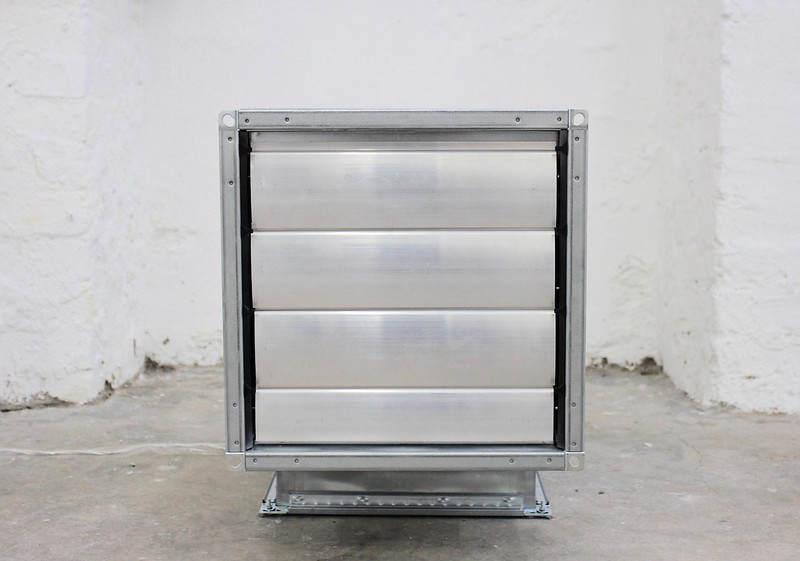
“3’2,2m3” (Sound) by Miriam Hamann at DZIALDOV, Berlin

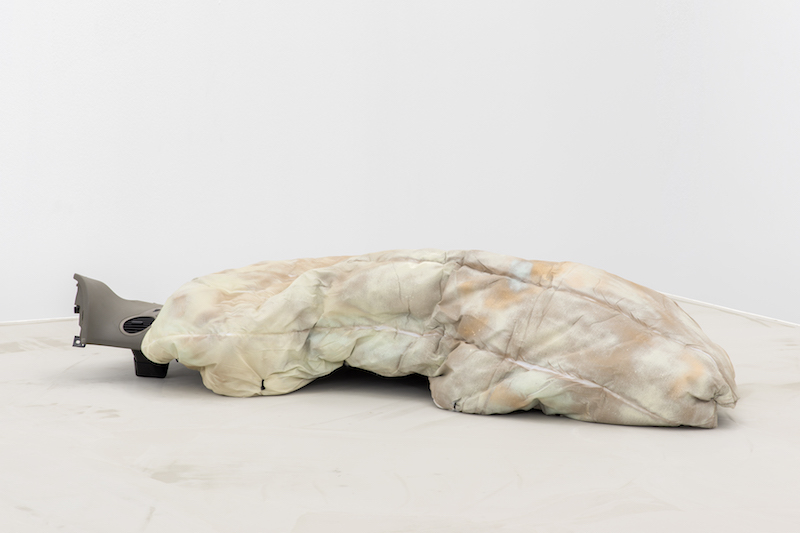
Having grown up in Austria and studied art in Paris and Vienna, the installation and sound artist Miriam Hamann reacts to her respective, direct urban surroundings and employs the inspiration to form minimalist, re-contextualised works. Air ducts, light bulbs, light switches, steel and concrete are repetitive materials that she frequently relocates. While currently spending time at the TITANIK residency for sound-based art practices in Finland, she recently moved to Berlin and continues capturing forms and sounds found in industrial design and every-day life in her sketchbook. In an interview we spoke about the tradition of minimalism, about the beauty in urban landscapes and her participation in the current group show "New Skin for the Old Ceremony" at the project space DZIALDOV in Berlin.

4 April 2016

INTERVIEW: ELMGREEN & DRAGSET

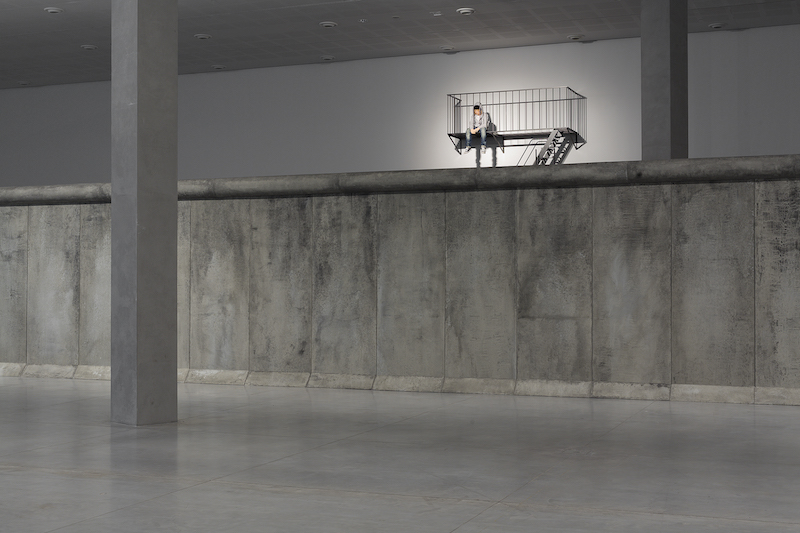
Elmgreen & Dragset_Tel Aviv Museum of Art_2016
All works © Elmgreen & Dragset; Courtesy Tel Aviv Museum of Art; all photos © by Elad Sarig 

Having worked together since 1995, the Danish artist Michael Elmgreen and Norwegian artist Ingar Dragset established a collective practice in which they typically sabotage social desires and rituals in public spaces or corrupt the choreography of art institutions and exhibition through interrupting aesthetic expectations. An imaginary dead art collector floating face-down in a pool at the Venice Biennale in The Collectors (2009), Han (2012) a male answer to Copenhagen's little mermaid placed by the seaside in Helsingør or, famously, Prada Marfa (2005), a fake Prada Boutique set in the middle of the Texas' desert – the interventions of the artist duo reveal a satirical and critical view on problematic conditions of power and capital, on social injustice, gender inequality and queer culture, but also on ordinary symbols of society's everyday lives. Their current exhibition Powerless Structures at Tel Aviv Museum of Art in Israel gave reason to speak with Elmgreen & Dragset about denying the audience's desires, demystifying art institutions and a need for unspectacular images in an era of selfie culture.

31 March 2016

INTERVIEW: BAHAR YÜRÜKOĞLU

Bahar Yürükoğlu_Bahar_Hedes_2015
all works © Bahar Yürükoğlu

These days it's really hard to stay positive about Istanbul and its vibrant art scene. Thanks to Istanbul-based artists such as Bahar Yürükoğlu, who was born and grew up in Washington DC, we can take a moment, celebrating the idea for other possible lives. Her current solo show "Flow Through" allows forgetting everything about reality for a while. Despite being located at ARTER, an institute for contemporary art centrally located at Istiklal Street, where an attack just happened a few days ago, the bright pink light shining from the gallery's entrance promises a travelling through time, to a space where there is still hope. This is because Bahar Yürükoğlu literally brings bright lights to our dark times. Her videos, site-specific installations and geometrical landscapes transfer us to completely other corners of the world, such as the Arctic. In our interview, we talked about how she started this journey and where she is heading. 

14 March 2016

INTERVIEW: PATRIC SANDRI

Untitled(to)_PatricSandri13 - Titelbild
all works © Patric Sandri

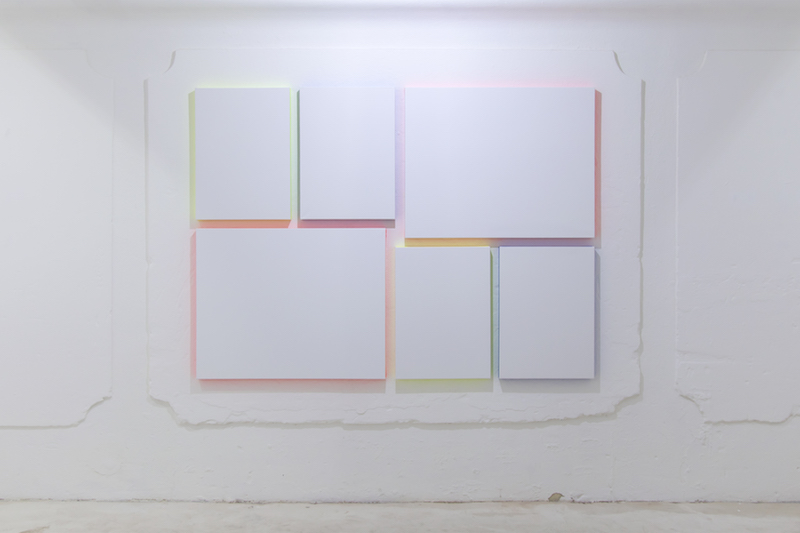
Patric Sandri is sometimes being asked about the Zurich Concrete Art group, which was founded in the 1930s. With their vivid colours and reduced vocabulary of form, the works of the young Swiss artist, who studied in Lucerne and at the Royal College of Art in London, do indeed evoke associations with Max Bill. Sandri sees himself first of all as a painter, who seeks to break with tradition through examination of objecthood. Here especially the materials that he uses for his works play a major role. If Sandri does not invade the space by layering, his works seem to retain flatness in terms of the media specificity. But because his examination of colour takes place at the edges, the illusion of three-dimensionality does not happen on the surface of the painting but outside its particular body. 

16 February 2016

INTERVIEW: JONAS MARIA DROSTE

Jonas Maria Droste_featured on artfridge.de
all works © Jonas Maria Droste

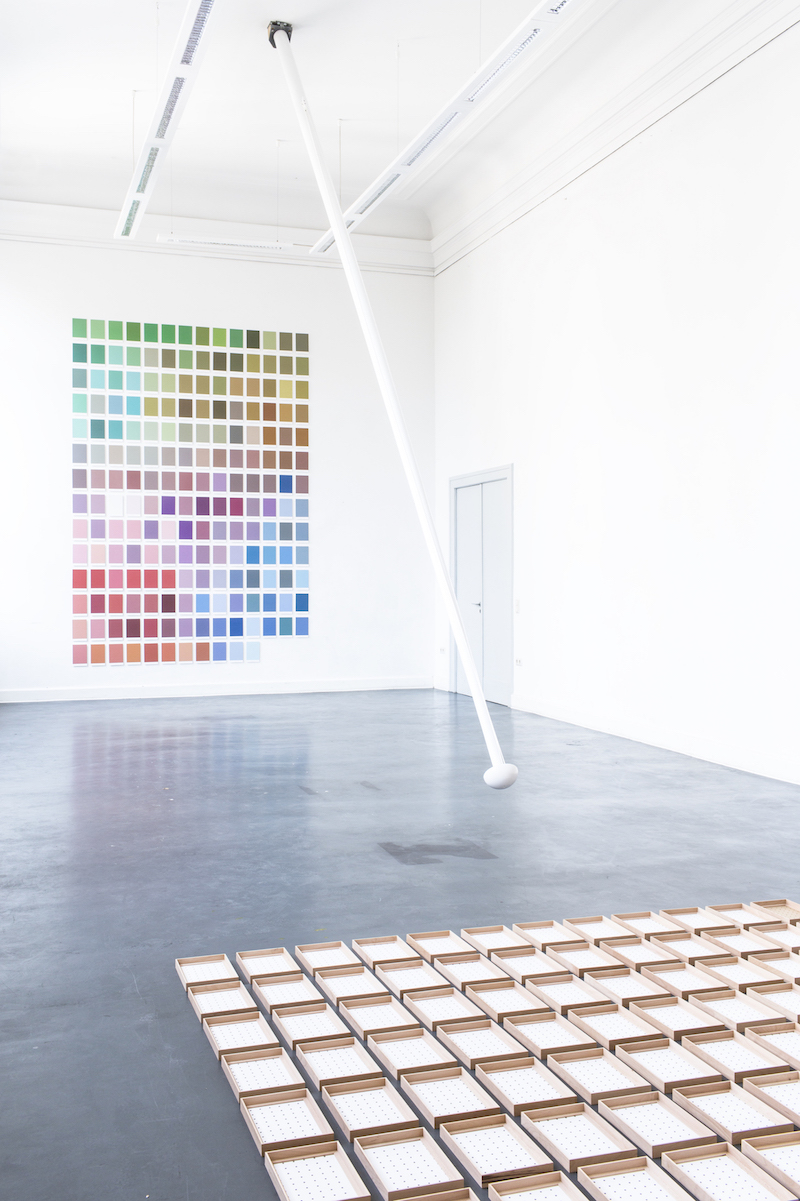
A large flag pole, dozens of hand-made wooden frames, a large scale of monotonous colours on paper. The installation Preussisch Blau by recent UDK-graduate Jonas Maria Droste is not only sleek and beautiful in its approach to a design-inspired formal language, it also comprises a critical notion about the formation of identity through the mere concept of nationality and artificially empowered objects, such as the national flag. Jonas, who grew up in Berlin in the 90s, moved to Vienna to study at the art academy and returned to Berlin a few years back to continue his practice in sculpting and to add another artistic medium: dance. He told me how performance and sculpture do and how they do not merge, what physicality means in regard to his work and why seduction is such an important component to his art.

2 February 2016

INTERVIEW: JON PILKINGTON

Jon Pilkington_Two Loops_V1 Gallery_featured on artfridge11
all works © Jon Pilkington at V1 Gallery Copenhagen, 2016

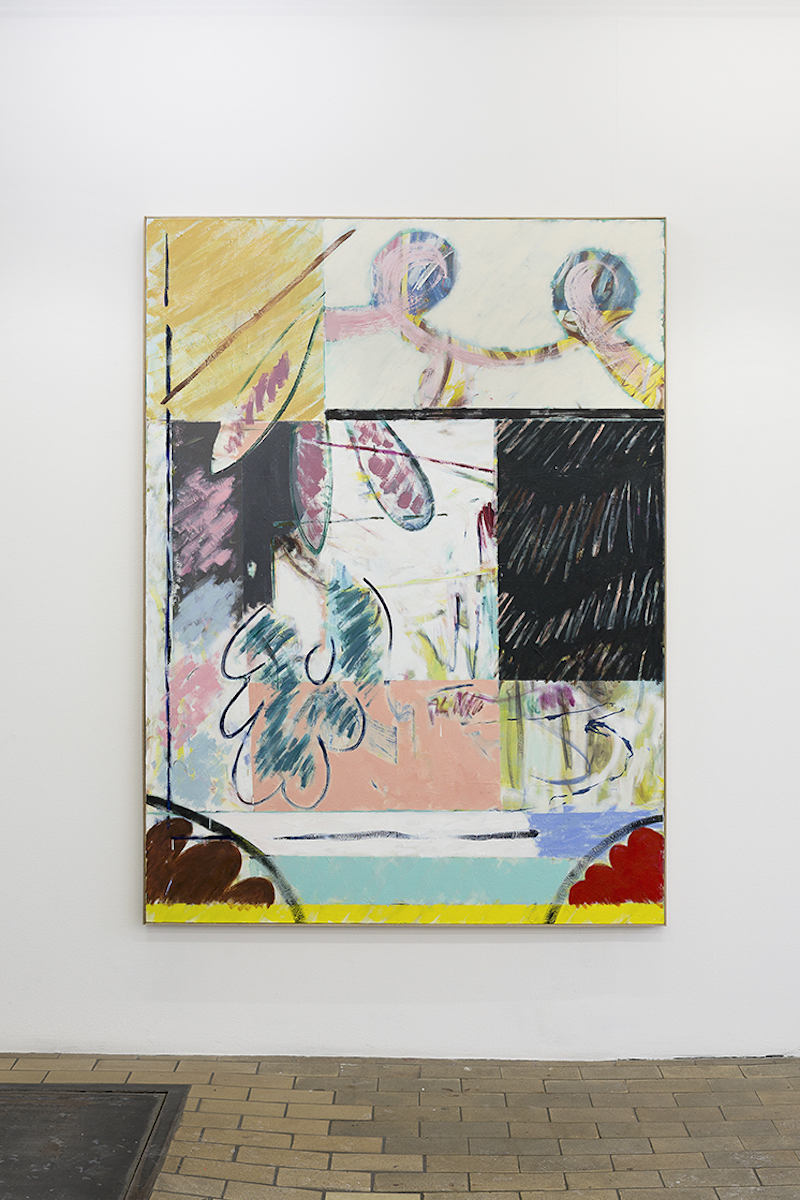
There is a playfulness attached to the surface of the colourful paintings by 26-year old British artist Jon Pilkington: circles, drops, stains, leafy and ornamental forms cover both small and large works. They deceive the eyes for a moment, preventing the sight to realise that the game is in fact a quite ritualistic, almost manic experiment of repeatedly producing similar motifs into a new surface on a canvas with the basic tools of painting: colour, form, composition. Chance and failure play a large role in this process. Jon, who works in a small studio space in London's busy art district Peckham, currently has his works on display in a group show at Rod Barton gallery, around the corner of his studio, and in the solo show 'Two Loops' at V1 Gallery, which is based in Copenhagen's meat-packing-district. We talked about what he does and what he doesn't consider essential in paintings.

17 January 2016

INTERVIEW: ERDAL INCI

Stumblers_video_2014_FullHD_1sec All works © Erdal Inci

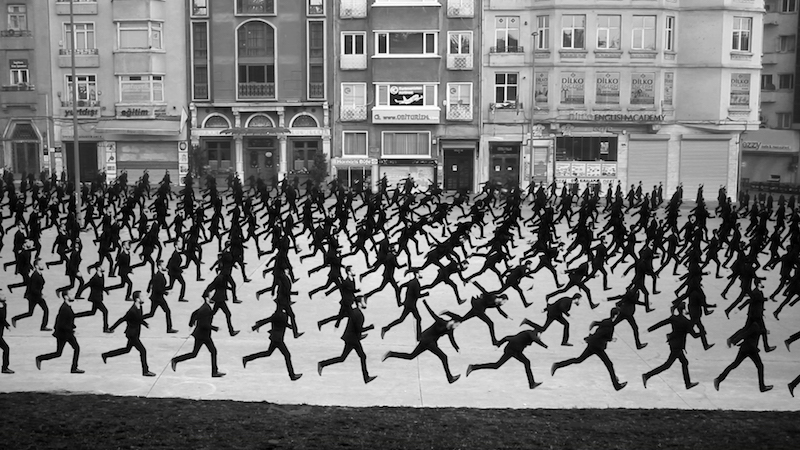
The art world can be a chaotic place, in which countless artists have simultaneous shows at the same time, making it impossible to catch them all! A few artists, however, you just cannot miss: Appearing frequently in various formats, from social media to fairs, from festivals and exhibitions to performances, media artist Erdal Inci from Ankara, Turkey presents his works broadly and keenly. While he originally graduated at Hacettepe University in Painting in 2005, Erdal has since been practicing with paint, photography, new media and video art between Istanbul and Berlin. Having thus strong bounds to Berlin, Erdal explained me his new work called `Berlin Wall- a data visualization` and he spoke about his thoughts on the future of new media art in Turkey.

6 January 2016

INTERVIEW: STEFFEN BUNTE

Steffen Bunte_artfridge_12
All works © Steffen Bunte; Photos © Hugard & Vanoverschelde

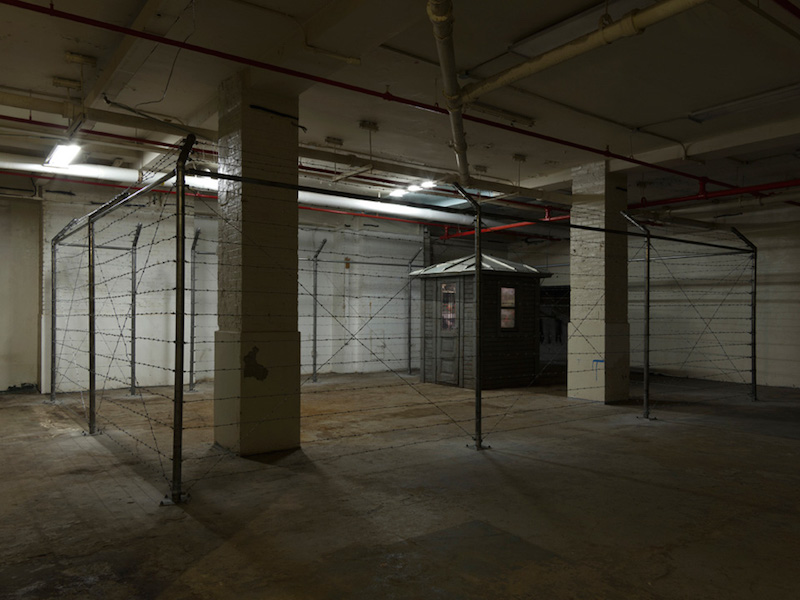
Steaming machines, buzzing exhaust pipes, shining lacquers – the German installation artist Steffen Bunte regularly incorporates automotive elements as his aesthetic template and material. Born in 1987, most of his recent shows merged clean designs of display formats with different media, always staging the automotive imagery as an ambivalent ground to play on: neither fully in its masculine cliché, nor exclusively as a producer of either pure adrenaline fun or dirty emission. His last show "Shell; Fiction (Trailer)", which took place at Galerie Jeanroch Dard in Brussels, literally wrapped a non-linear and deeply poetic narrative around fragments of urban life, and the questions that seem to come with it. A road to nowhere. A road from nowhere. In our interview Steffen Bunte speaks about his exhibition, its cinematic format and the role of cars for his art and his life.

29 October 2015

INTERVIEW: MARI SPIRITO

Hale Tenger, We didn't go outside we were always on the outside We didnt go inside; we were always on the inside 1995-2015, Galeri Nev, Istanbul, Green Art Gallery, Dubai, Protocinema, New York photo, Vehbi Dileksiz Installation by Hale Tenger "We didn't go outside; we were always on the outside. We didnt go inside; we were always on the inside 1995-2015", Galeri Nev, Istanbul, Green Art Gallery, Dubai, Protocinema, New York / photo © Vehbi Dileksiz

American Curator and art manager Mari Spirito is one of Istanbul's most active persons in art world, always organising different projects at the same time and traveling to a other countries frequently. Dedicated to encouraging careers for emerging artists and curators, she is currently the consultant for Art Basel's "Talks Program" and has previously lived in New York, where she was director at 303 Gallery. In 2011, Mari initiated her own project Protocinema – an art organisation that connects cities such as New York and İstanbul, through educational programs, exhibitions and various collaborations. One of her newest, self-initiated endeavours is the temporary exhibition series Proto5533: A collaboration between Protocinema and the Istanbul-based artist-run-space 5533, displaying emerging curators and artists. I met Mari in Istanbul's district Çukurcuma, where we had coffee on the rooftop of a historical building. She told me about Protocinema, its goals and why she chose Istanbul as a base.

21 October 2015

INTERVIEW: BILLY RENNEKAMP

Billy Rennekamp_houston in the blind
all works © Billy Rennekamp

Visting the Neukölln-studio of 1988-born US artist Billy Rennekamp reveals his intense passion for sports, rules and any kind of game, which he integrates and manipulates in every work that he produces. Balls, sticks, boards and countless props are spread all over the place. The space smells of rubber and leather. I talked to him about material fetishism, the shift from digital to physical art and, obviously, why he is playing games.

13 October 2015

INTERVIEW: YVONNE REINERS AND TINA SAUERLÄNDER

logo2

What's hot? A question that we might hope to find resolved at every biennial, art fair or art week that we attend. But what's hot today might be over by tomorrow. And: who decides what's hot, anyway? Yvonne Reiners, a curator and researcher running the performance series Performing Encounters that re-imagines formats of encounter and discussion; and Tina Sauerländer, a curator and writer, who has been organising numerous exhibitions under the label peer to space, jointly organised the upcoming Pecha Kucha Art Night at Haus am Lützowplatz in Berlin. The event will ask this very question amidst a couple of professionals from different disciplines, such as the art historian Annika von Taube, the art dealer Volker Diehl or the publisher Uta Grosenick. I asked the two organisers, why they felt the need to pose this question.

28 September 2015

INTERVIEW: EBRU YETIŞKIN

IMG_1310
Buşra Tunç "Sinusoid" (2014), interactive light installation, "WAVES" exhibition at BLOK art space; photo © Rayna Teneva

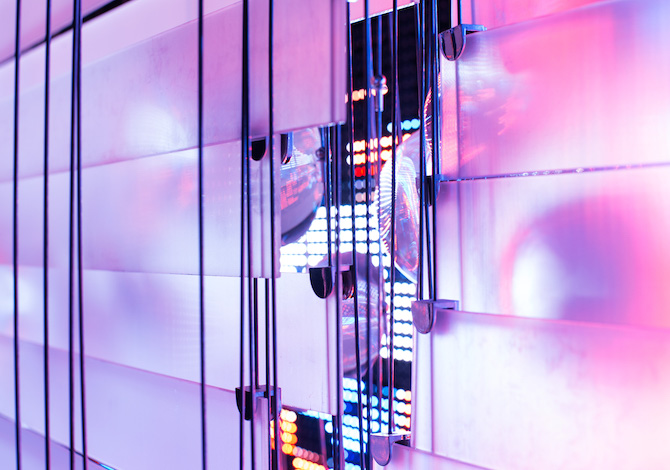
Istanbul-based curator, art writer and sociologist Ebru Yetişkin embeds her practice in-between science, technology and art. Born in 1976, she studied Communications and Radio-TV-Cinema at Istanbul University and Science, Technology and Society at Université Louis Pasteur and the Istanbul Technical University. Her PhD in sociology was entitled “Nettachmental Thought: Problematisation of Social Sciences through Quotidian Practices” and has led to her current teaching in Sociology and Media at Istanbul Technical University and Isik University. Specialised in the overlapping of science, technology and art, she researches at the International Association of Contemporary Art Critics in Turkey (AICA). Focusing on new media art, she curated the exhibitions "Cacophony" in Açıkekran New Media Art Gallery, "Code Unknown" in 42Maslak and "WAVES" in BLOK art space. For this year's Plugin show "X-Change" – the new-media art section at Contemporary Istanbul Art Fair – Ebru has been appointed curator and told me about her curatorial approaches, algorithms, about organic and technological bodies and about her ideas on mutation and revolution.