13 November 2016

INTERVIEW: YOĞUNLUK

sublime_3
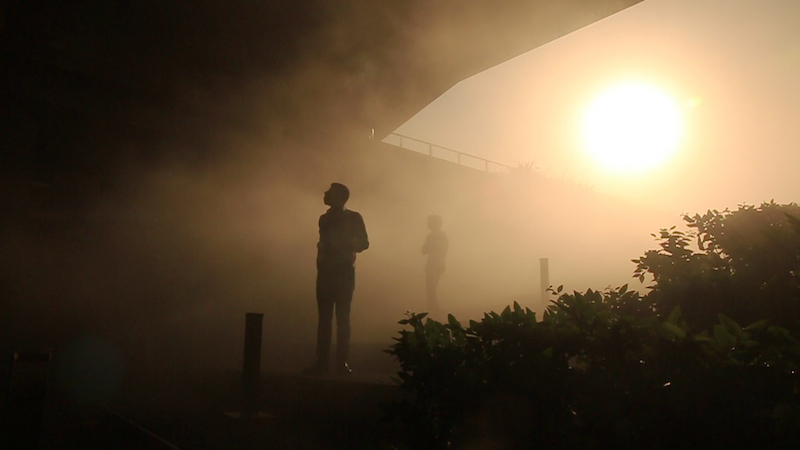
"Sublime" © Yoğunluk

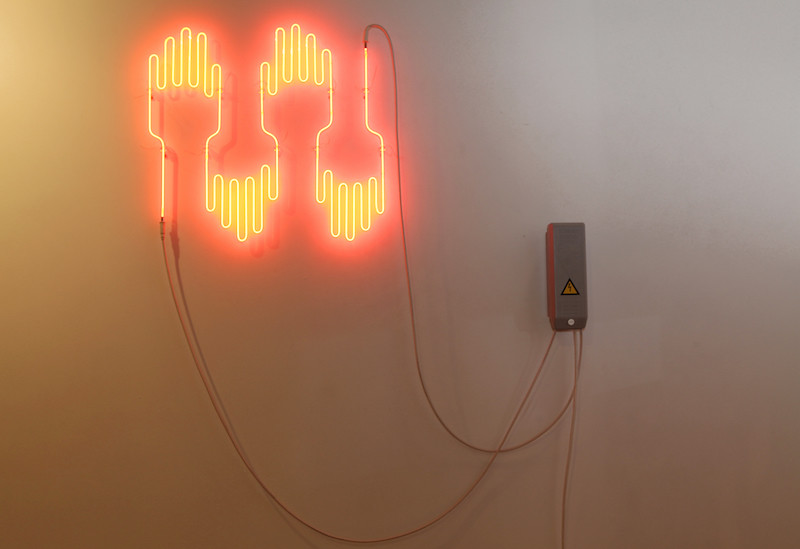
There is a thin line between an architecturally influenced art installations and experienced based installations using the architectural space. Yoğunluk is an art initiative from Istanbul including a team of 8 people working and experimenting on relations between “time”, “space” and “experience” in art. They force the viewers to stand alone in the moment and experience the space they step into, questioning everything around them. Their spatial installations are impossible to record or photographed – a fact that makes them more unique, especially in a generation that is used to consume and archive everything. One might say they create new spaces in old surroundings, or one might say they create a way of seeing the actual space we live in. We met İsmail Eğler, one of the co-founders of the initiative, and talked about how they started their journey and what they are planning for the future.
25 October 2016

INTERVIEW: WILLEM WEISMANN

2002bc 2012
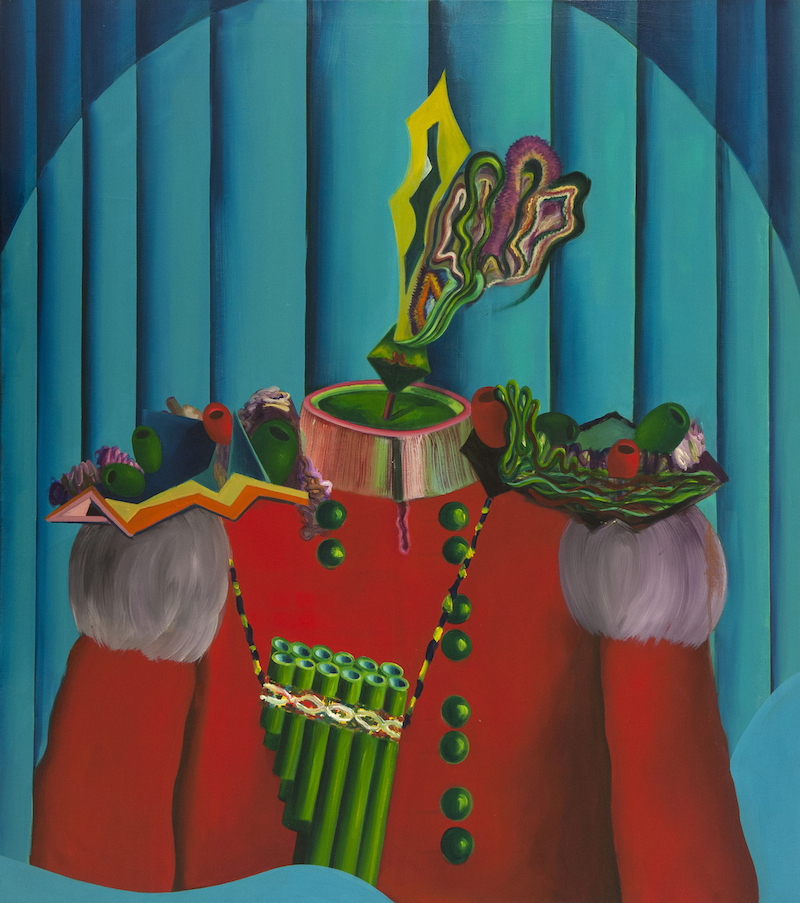
all works © Willem Weismann


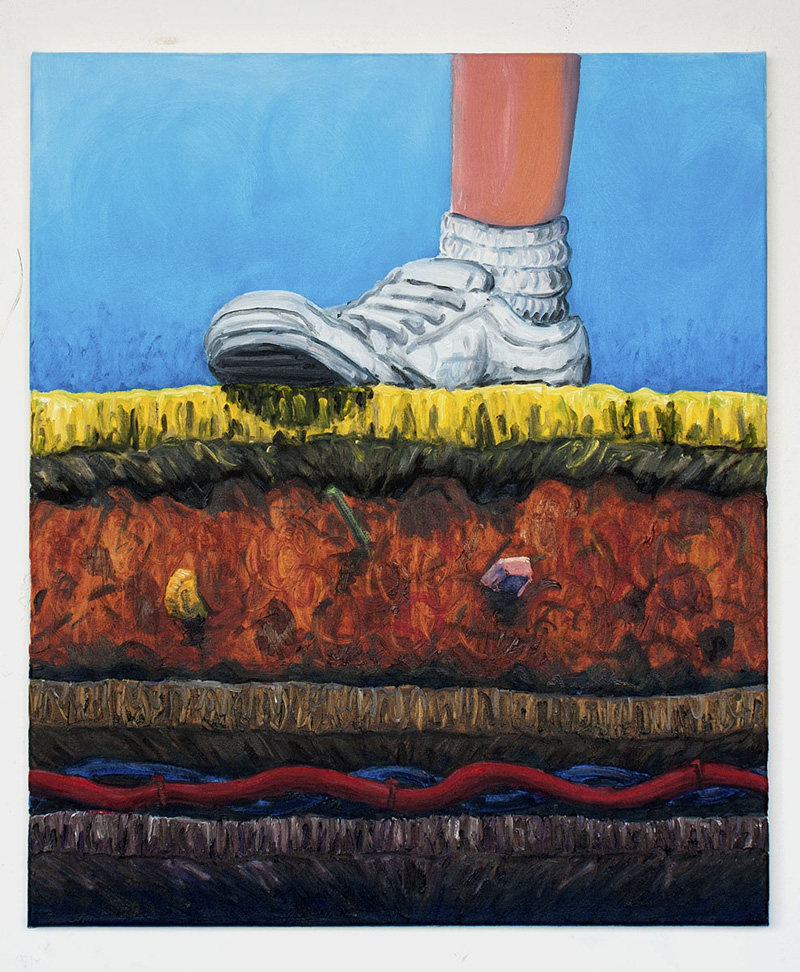
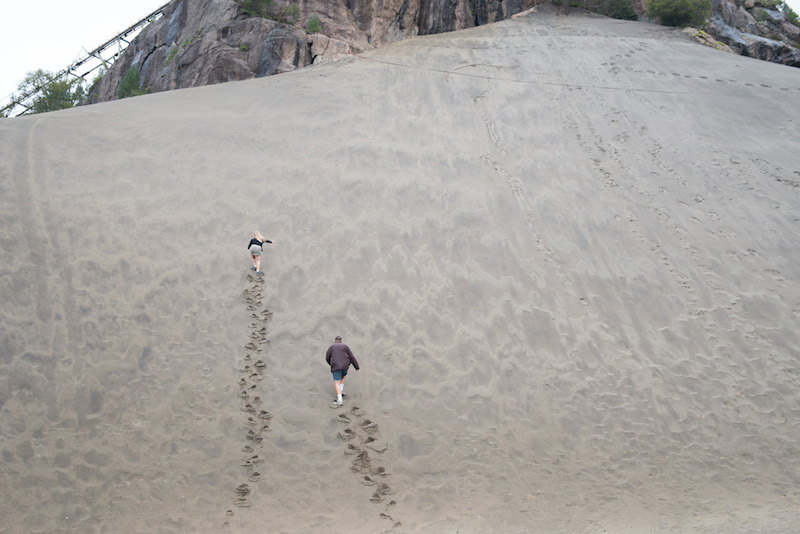
Willem Weismann paints chaos. The narrative scenes that the Dutch artist creates stem from his own imagination. Like stages, they present interiors and extras, revealing layers of flooring, stapled props and set design constructions. In this imperfect world, the perfect façade is always already crumbling. While his paintings often reflect aesthetics from films or even computer games, he returns to the painterly and analogue medium by embedding his entire palette of colours on top of the motif. These could be books, anonym reading figures or simply chaotic interiors, tempting one to get lost in details. Born in 1977, Willem studied at Goldsmiths College in London, where he currently lives and works. His upcoming exhibition "Basement Odyssey" at the ZABLUDOWICZ COLLECTION in London opens the 10th of November.

19 September 2016

INTERVIEW: NICO ANKLAM

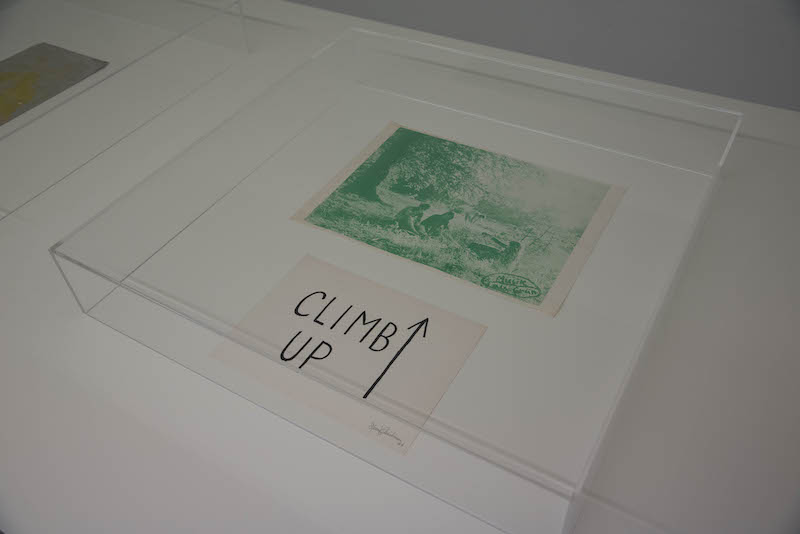
Performance Iteriations in VELLFERDEN; Photo © Hans Edward Hammonds Henning Christiansen (6) Untitled, poster print, 1969_foto Thomas Gunnar Bagge_2703
Curator Nico Anklam and curatorial assistant Mai Dengsøe Hansen during the performance Iteriations in VELFERDEN (August 2016), photo © Hans Edward Hammonds; 
Two paperworks by Henning Christiansen at Kunsthal 44 Møen, photo © Thomas Gunnar Bagge

"Henning isn't a member of FLUXUS. Henning is FLUXUS"*, the Danish artist Bjørn Nørgaard wrote about his friend and artist colleague Henning Christiansen, who passed away in 2008 but left a giant archive of FLUXUS artefacts and a legacy of experimental music compositions. For Christiansen life and art merged fluently – he dedicated his practice to nature, its sounds and colours. "Unlike the complexity of musical modernism so far, my vision thus tends towards extreme simplicity"**, he stated, envisioning a transformation from complex to pure, from eye to ear, from visual to auditive. 

Having established an isolated and rural, but nonetheless fruitful artist community on the Danish island of Møn, Christiansen, his wife Ursula, Nørgaard and the curator René Block jointly founded what is known today as Kunsthal 44 Møen – an ambitious art institution that is located just across the house of the Blocks and Christiansens. The Berlin-based curator and art historian Nico Anklam, who teaches art theory at Universität der Künste in Berlin, has been involved in the institution's exhibition and research making for a few years, and is currently organising a project that reflects Henning Christiansen's notions on nature and its affect on language through a small selection of Christiansen's art works in an exhibition at the Kunsthal in Møn and through a travelling performance program with international artists. 

14 September 2016

INTERVIEW: EKW14,90

1_Foto
ekw14,90, Imperativ (l'individu dans l'image), 2016
HD video, courtesy ekw14,90

The artist collective ekw14,90 was founded in Graz in 2000 by Moke Klengel, Christoph Rath, Marlies Stöger, and André Tschinder. Together they conceived numerous exhibitions and projects working in the fields of video, photography, music, theater, drawing and publishing.

In their current exhibition “eh ben” at Künstlerhaus – Halle für Kunst und Medien, in Graz, the collective presents a new kind of artistic avant-garde, the “Zu-Realisten” – a pun that combines the concepts of being “too realist” and moving “toward realism”– and their approach in perceiving reality. In Graz we talked about the potential of the subjunctive, the imperative, art manifestos and how this influences the perception of reality.

9 September 2016

INTERVIEW: GORKA MOHAMED

Domingo_Despotico_II All works courtesy and © Gorka Mohamed

The work of Spanish artist Gorka Mohamed is of a both humorous and disturbing nature. Offering a concrete allusion to the pictorial language of cartoons, his protagonists often bend the boundaries between reality and fiction, between a yearning for infinity and the set rules of their everyday lives. With great sensitivity towards the shifts within modern day society, Gorka analyses sharply, while introducing a refined imagery that thrives on a unique use of colour, character and form. His current exhibition at Peter von Kant "Raise ravens and they will pluck out your Eyes" introduces his latest body of work while revealing a distinct take on the current state of cultural reality.  

20 July 2016

INTERVIEW: ISTANBUL QUEER ART COLLECTIVE


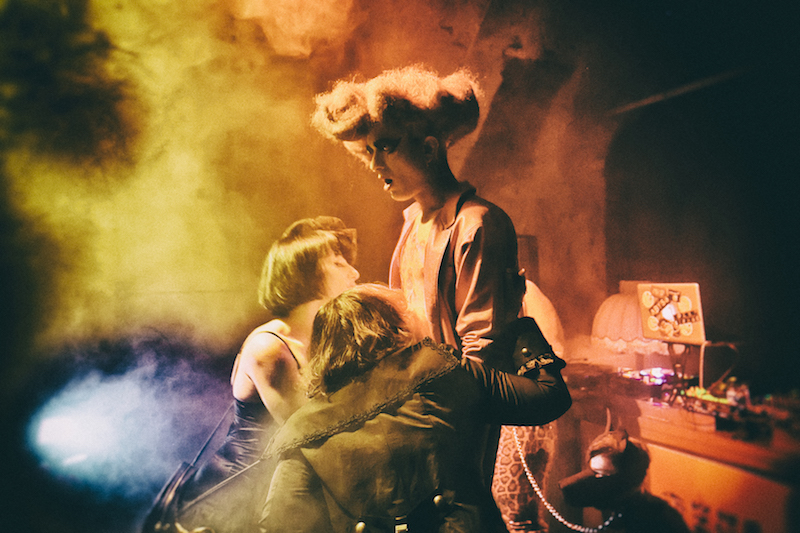
6.PostFluxDogGames "PostFluxDogGames", 2014, photo by Ayşe Kaya © Istanbul Queer Art Collective

Founded by the three artists Tuna Erdem, Seda Ergul and Onur Gökhan Gökçek in 2012, the Istanbul Queer Art Collective is a performance collective based in Istanbul. Recently, Leman Sevda Darıcıoğlu and video artist Burak Serin have joined the collective and opened it to further collaborations. Having performed more than 20 performances around the world, their recent project “Fluxus Remakes” re-stages and "queeryfies" fluxus happenings, inviting participants and viewers to try, experience and – most importantly – to fail with them. This is because neither perfection or virtuosity, but incompetence and failure is what the collective explores. Engaged in political and social discussions, it's possible to come across their happenings in a nightclub, a park, an ancient site or simply anywhere around Istanbul. Moreover, the founders Tuna Erdem and Seda Ergul are not only engaged in Istanbul's offline art world, but they also run the art blog sanatsepeti, in which they write about their experiences through exhibitions and performances. In our interview, I talked to the co-founders Tuna Erdem and Seda Ergul about how clichés of orientalism and of being queer merge and meet in their practice, about how the Turkish occupy movement influenced their performances and what it exactly means to practice a "queer art of failure".

27 June 2016

INTERVIEW: SEBASTIAN NEEB

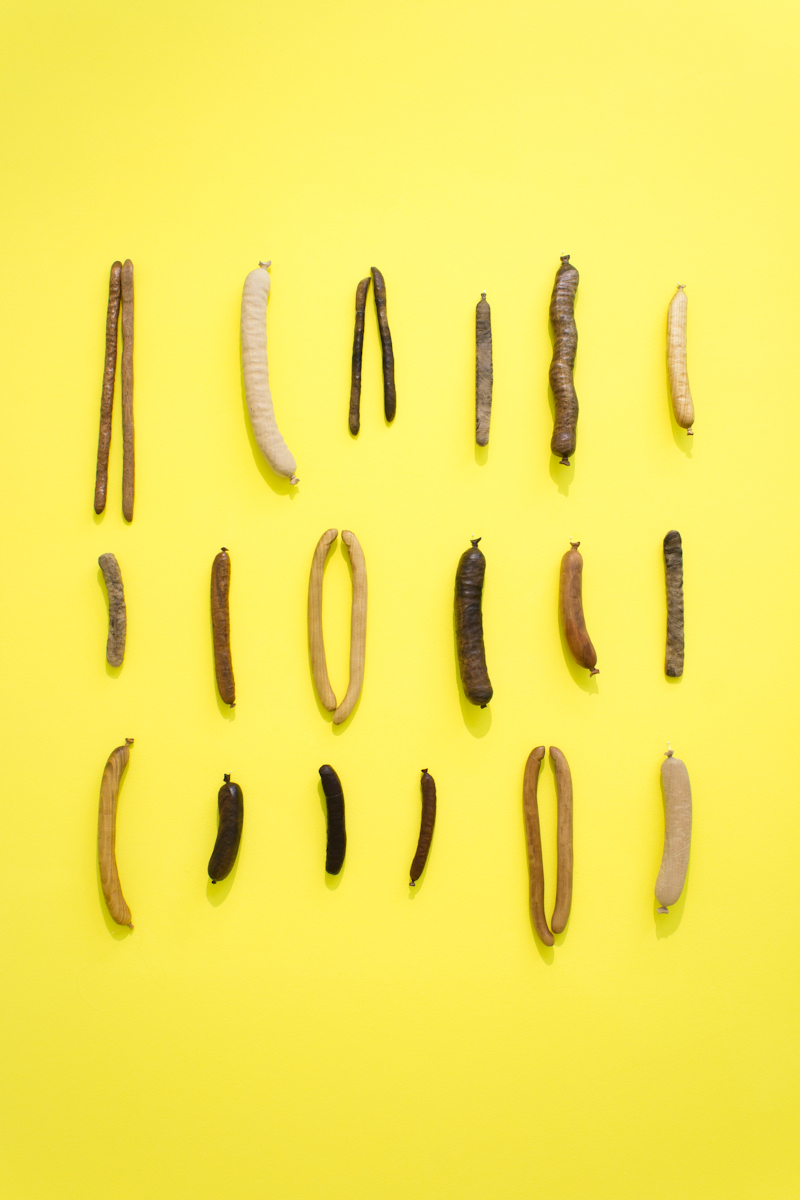
Sebastian Neeb_artfridge_5 "22 sausages to stare at, praise and worship" (2015) © Sebastian Neeb

A few weeks ago "Praise and Trophy“ opened at Berlin art space Dzialdov. The show dealt with the question of how a certain symbolism can be held accountable for moments of sublimity, majesty and superiority. It asked how much these sentiments are rather a matter of traditions and emotions than of an actual expression of reality. Three different positions, Lars Bjerre, Max Dickhaus and Sebastian Neeb were invited to participate; I sat down with one of them. 

With a diverse body of work, Berlin-based artist Sebastian Neeb (b. 1980) surveys how certain media can be used to guide, influence and control individuals as well as the mass and how closely real and fake values are linked together. In his idea, the awarding of trophies and titles is rather a matter of manipulation, a loose promise of a value that only exists in people’s head without having an actual materialistic counter-value. Following this concept, a new kind of character head is courting for leadership within his series "New Leader", while "Trophies for Outstanding Performance Over Decades" awards rather nonsensical achievements like the finding of an already emptied jug of wisdom.

2 June 2016

INTERVIEW: FLORIAN KUHLMANN

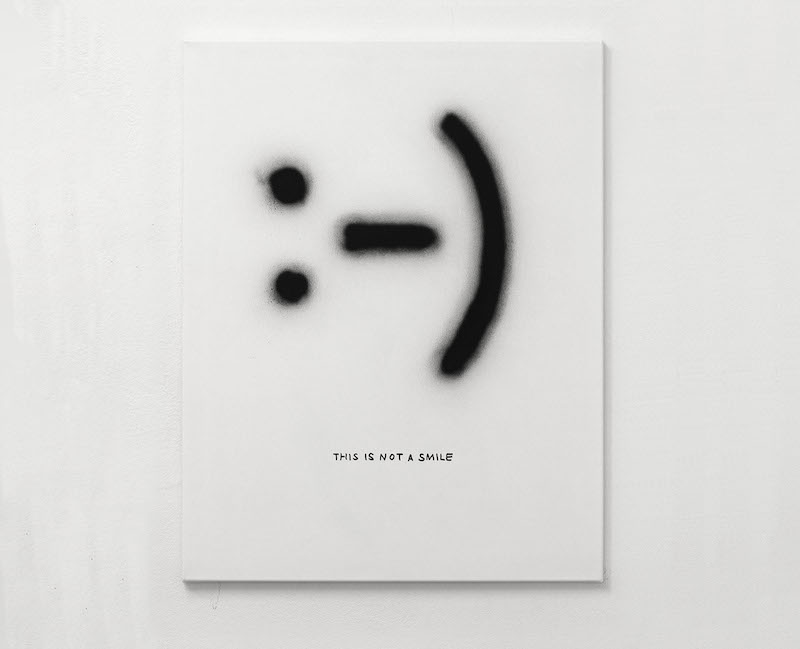
Untitled "This is not a smile" © Florian Kuhlmann

Florian Kuhlmann is not merely a digital artist. The challenges, the ambiguity, the changes and the opportunities posed by digital technology are central to all of his countless projects, uniting his interests under the key of digitalism. Working as an artist, curator, organiser of festivals and conferences, blogger or researcher, but also as a web designer or coder, 1975-born Florian currently runs the project space Digital3mpire and the art blog perisphere.de, both of which emphasise digital art in the area in and around Düsseldorf, where he lives. Having exhibited and curated internationally, his current project "this is not" returns to the material of the canvas and explores how the relation of text and emotion have altered in a time of digital every day conversations. His sharp reseach in these new social phenomena, that we are all a part of, are worth taking a closer look. In our interview he explains why digitalism is such an urgent matter to him and how art is a part of this discussion.


18 May 2016

INTERVIEW: OLIVER GRIFFIN

Groundworks6proposal “Demonstrations of Patterns in Flow” (2016) @ Oliver Griffin

"Yes, you did meet Oliver Griffin and yes he was boring," it says on the business card of the conceptual photo artist. This little, sarcastic wink with the eye is quite representative for both, his art and his character. Originally born in 1983 in Boscome, UK, Oliver now lives between London and Berlin and takes one photo a day. It's one out of many routines that he established since becoming an artist. A dedicated photo camera and bicycle-lover, he often incorporates autobiographical items and collections of things into his exhibition and book projects. On display from the 20th May 2016 at Peckham Refreshment Rooms in London, his photo project "Insecurity of Wealth in layers of paint" (2016), which is inspired by Rihanna's "Umbrella" lyrics "Baby cause in the dark, you cant see shiny cars", depicts a series of black cars in dark nights. Oliver has also been set the task of looking over Artfridge's Instagram account as part of Photo London this week. In our interview he told me about what photography means to him, the importance of its technical aspects and why art needs to be international.

15 May 2016

INTERVIEW: LISA OFFERMANN

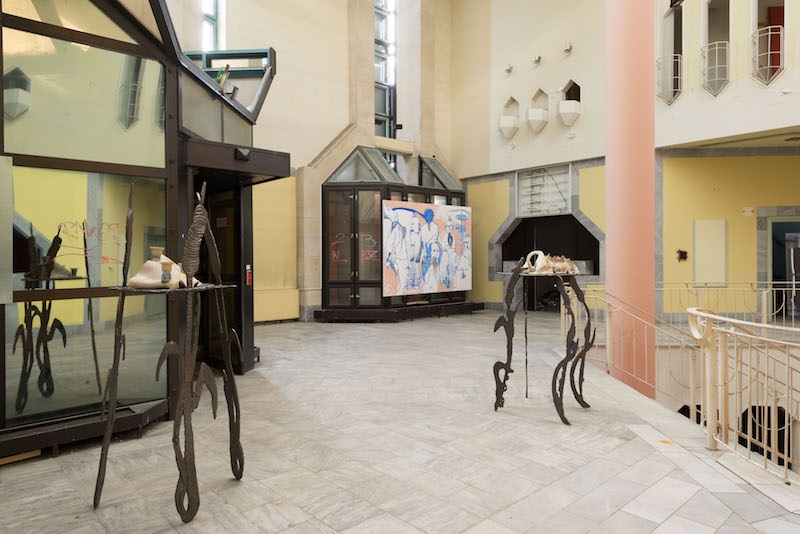
2. Installation view
Installation View "The State of Having Left":  Jean-Marie Appriou (front) and Melike Kara (back)

There is something fascinating about the atmosphere of abandoned buildings and areas, because the architecture's decay reveals something about the past, about people and objects who used to have a certain place at a certain time. It's a particular absence, a "State of Having Left", which we become aware of. In a group show with the same title, co-curators Lisa Offermann and Pauline Seguin installed works by Jean-Marie Appriou, Violet Dennison, Stefanie Heinze, Melike Kara, Benjamin Lallier, Michail Pirgelis and Carsten Tabel in an abandoned bowling center in Leipzig to address these remains of society. The show, however, is exclusively accessible online. Offermann, who originally studied veterinary medicine and later changed to art history, is based in Berlin. She previously curated exhibitions in project spaces, such as Archiv Massiv in Leipzig and has worked for several contemporary art galleries. In our interview she speaks about exhibitions as stages, the remains of corporate society and ‘The State of Having Left’.

19 April 2016

INTERVIEW: MORITZ FREI

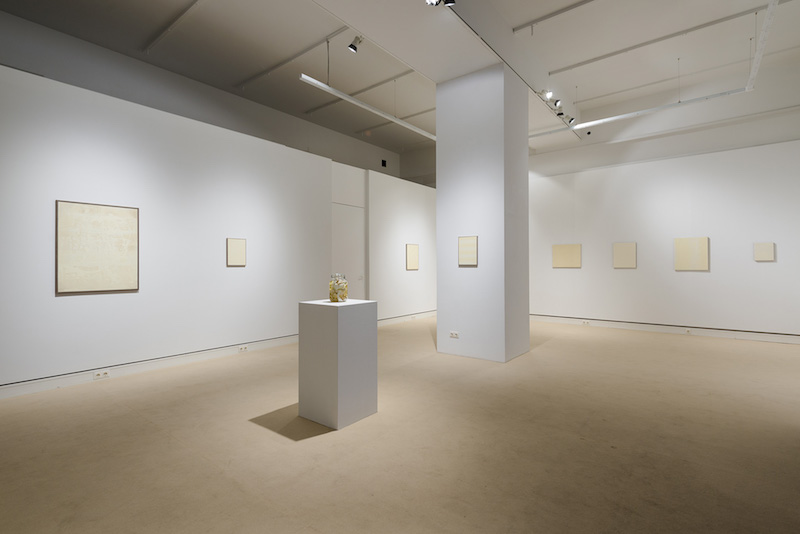
TGood-MFREI-artdoc-26-03-2016-_0047
"Cosmic Latte" exhibition at Galerie im Turm, © and courtesy Moritz Frei; photo: Trevor Good

What comes first, the chicken or the egg? Moritz Frei must have asked himself that question, when planning his current exhibition COSMIC LATTE at Galerie im Turm in Berlin. The central work, a half-hour long film, shows Frei forcefully cuddling a rooster while another scene displays an ostrich egg slurping milk in a stop-motion-aesthetic. The film primarily documents the process and development of Frei's show, for which he hired seniors to paint minimalist paintings for him. The exhibit is monotonously beige, it is dedicated to the integration of an older and perhaps forgotten generation, and it eventually questions the value of artistic genius. Frei, who was born in Frankfurt, studied at the HGB Leipzig and now lives and works in Berlin, is an artist working on the threshold between performance, photography and conceptual intervention. Each of his projects tell another narrative and seduce his audiences with irony and sharp social criticism. I spoke to him about his current show and past projects.

15 April 2016

INTERVIEW: ANTJE HUNDHAUSEN & NATHALIE HOYOS

little_warsaw_fence_2012_56x60_v3
Little Warsaw "Fence", 2012; at ART COLOGNE 2016
– In Collaboration with Deutsche Telekom AG –

At this year’s Art Cologne a well curated booth greets the visitors right before they are entering the main hall: The Art Collection Deutsche Telekom. With a focus on Eastern European Art, this collection takes a rare stand in the collector’s market and is actually one oft he few booths at the whole fair hinting into the direction of how current political events are affecting artists around Europe. Two newly acquired positions are being presented: Nevin Aladağ who was born in 1970 in Turkey, but grew up in Berlin and the artistic duo Little Warsaw, born in 1970 and 71, who are both originally from Budapest although the name might suggest otherwise. Growing up in different surroundings, both positions deal with their backgrounds diversely. However, they find common ground in their mutual artistic focus on matters of heritage and cultural identification.

While Nevil Aladağ, who is mainly known for her multi-channeled video installations and sound elements, concentrates on subjects of external perception and self-awareness shaped through her Turkish-German heritage, Little Warsaw create objects and pieces that process the transformation of the post-socialistic society after the cold war in Hungary. Although both, Aladağ and Little Warsaw, often confront cultural matters with regards to their respective countries’ histories, traditions and heritages, their work has gained a particular up-to-dateness during the latest political events. We sat down for a chat with Antje Hundhausen, Vice president for marketing communication at Telekom and Nathalie Hoyos, curator of the collection alongside Rainald Schumacher.