17 January 2018

INTERVIEW: SANNA MOORE

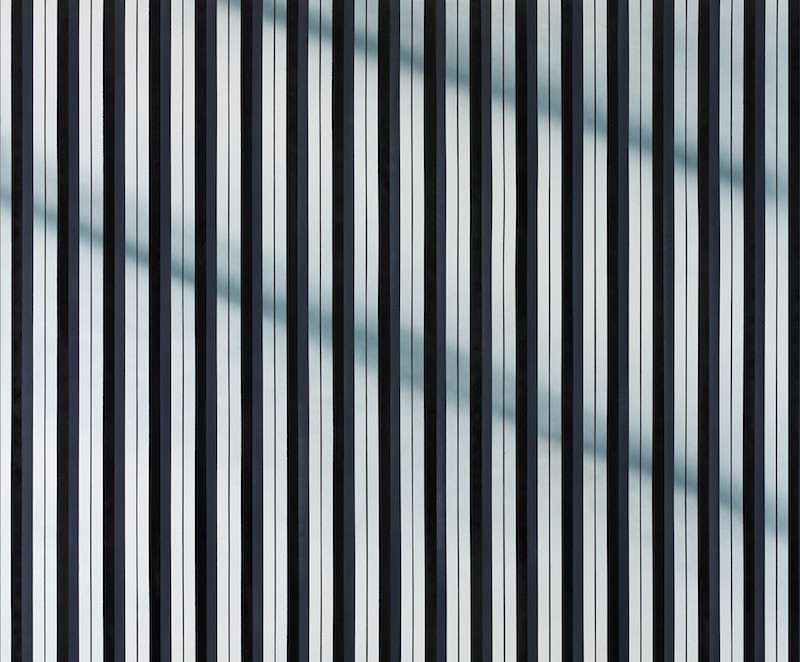
© Indrė Šerpytytė Courtesy Parafin, London© Indrė Šerpytytė "03" from the series 150mph (2015)

Sanna Moore, curator for contemporary art at the Imperial War Museum in London, on the exhibition "Age of Terror: Art after 9/11", on strategies of representing war and terror through art, and on how contemporary art fits into the structures of a war museum.


20 December 2017

INTERVIEW: REBECCA WILSON

Samsung The Frame Lifestyle (4)_featured on artfridge
all images © Samsung / The Frame
– In  cooperation with Samsung –

Anna-Lena Werner: Rebecca, your career took you from acting as publishing director of Weidenfeld & Nicolson, working as an editor for Art Review and Modern Painters to joining Saatchi Gallery as director. Since 2013 you act as chief curator and directory of the Art Advisory of Saatchi Art. Having experienced the world of contemporary art from so many different angles, can you put words on how your different positions changed the way you look at art?

Rebecca Wilson: As you say, I started out my career in book publishing working closely with writers for 10 years. I then shifted to editing art magazines before moving into the gallery world, first of all the brick and mortar Saatchi Gallery in London and now online with Saatchi Art based in Los Angeles. I have always welcomed change and looked for new challenges. I’m also very motivated by helping creative people find the recognition they deserve and feel strongly that the traditional art world has failed many talented artists. Whether an artist is taken on by a gallery or not is fairly arbitrary and is certainly not a reflection of the quality of the work being made. At Saatchi Art we are trying to fill this huge gap by giving artists all over the world the opportunity to show their work to an international audience online. We are also helping people who love art to discover many fantastic artists they wouldn’t otherwise find. In the last 6 months we have sold works to people in over 80 countries by artists in 100 countries. I think my background and openness to doing things differently has made me more flexible in my approach to running an art gallery and re-thinking how the art world can really best help artists to have sustainable careers and make a living. 

12 December 2017

INTERVIEW: FRÉDÉRIC BUßMANN

Mona Hatoum_Displacements_MdBK Leipzig2 Mona Hatoum “Quarters”, 2017 
ALL IMAGES: installation view, photo: dotgain.info, Leipzig Museum of Fine Arts
; Courtesy of the artist and the Leipzig Museum of Fine Arts, © the artists

A red glowing globe, suggestively identifying the world in an alarmed stage, is placed in the central hall of the lower exhibition space in Leipzig's Museum of Fine Arts. There are suspended strings made of barbed wire, objects that remind of a burned interior and bombed high-rise buildings – all evoking a post-apocalyptic sentiment in the beginning of an exhibition that brings two well established artists together for the first time: Mona Hatoum, creator of the before-mentioned works, and Ayşe Erkmen, whose video- and installation-based 'green room' and her multi-coloured light installation "Glass works" (2015/2017) employ a strikingly contrasting aesthetic language, have been brought together for a large show titled "Displacements". Addressing both the interior space of the museum and the world outside, both artists employ modes of seriality and the re-purposing of politically charged objects and materials, without being too specific about the exact context of their works. In this interview Frédéric Bußmann, curator of the exhibition, talks about his initial motivation for this show, the challenges of the install and he explains why he found it so important to bring the works of Erkmen and Hatoum together right now.

21 November 2017

INTERVIEW: JESSICA POOCH

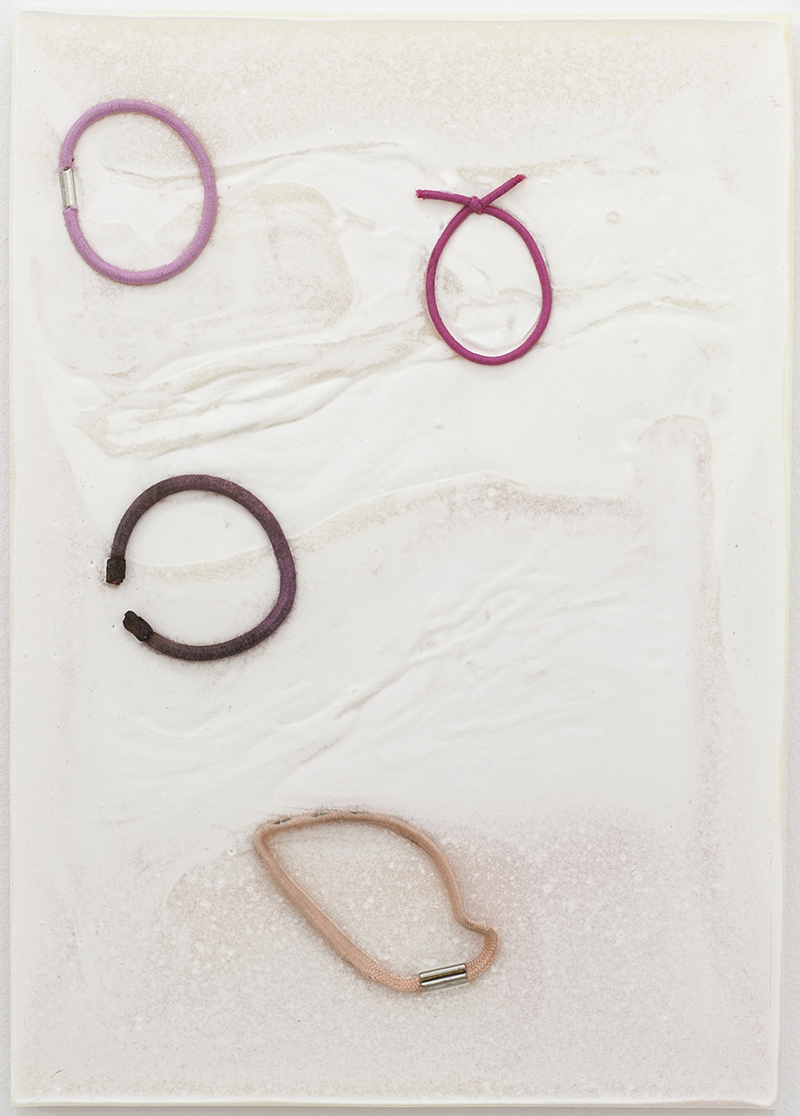
Bodybuildings "Bodybuildings" (2015) © Jessica Pooch

There is something utterly repelling about having to touch a lost and found hair tie. Old unwashed hair, maybe even a smell, dirty fingers – an object that opposes hygiene on so many levels. The collection of found hair ties began in Berlin during an artist residency at Air Berlin Alexanderplatz – located in one of those grey and dull high-rise buildings – the place where I first met the Zurich-based, German artist Jessica Pooch. Her art touches human instincts: feelings of shame and disgust, of togetherness and intimacy versus publicity. The language of her work – sleek and disturbing at the same time – speaks a formal vocabulary often very close to the aesthetics of design, while it questions basic functions and values that objects and materials are supposed to fulfil or suggest. Public toilets, piercings, artificial fingernails, grab poles are materials that she functions as performative tools, subtly pointing at the viewers' own anticipation of what these materials might stand for and how they make them feel. In our interview Jessica told me what it is that interests her about the concept of intimacy and how she plays with it on many different levels in her art.

19 October 2017

INTERVIEW: WERKSTADT GRAZ / BARBARA EDLINGER

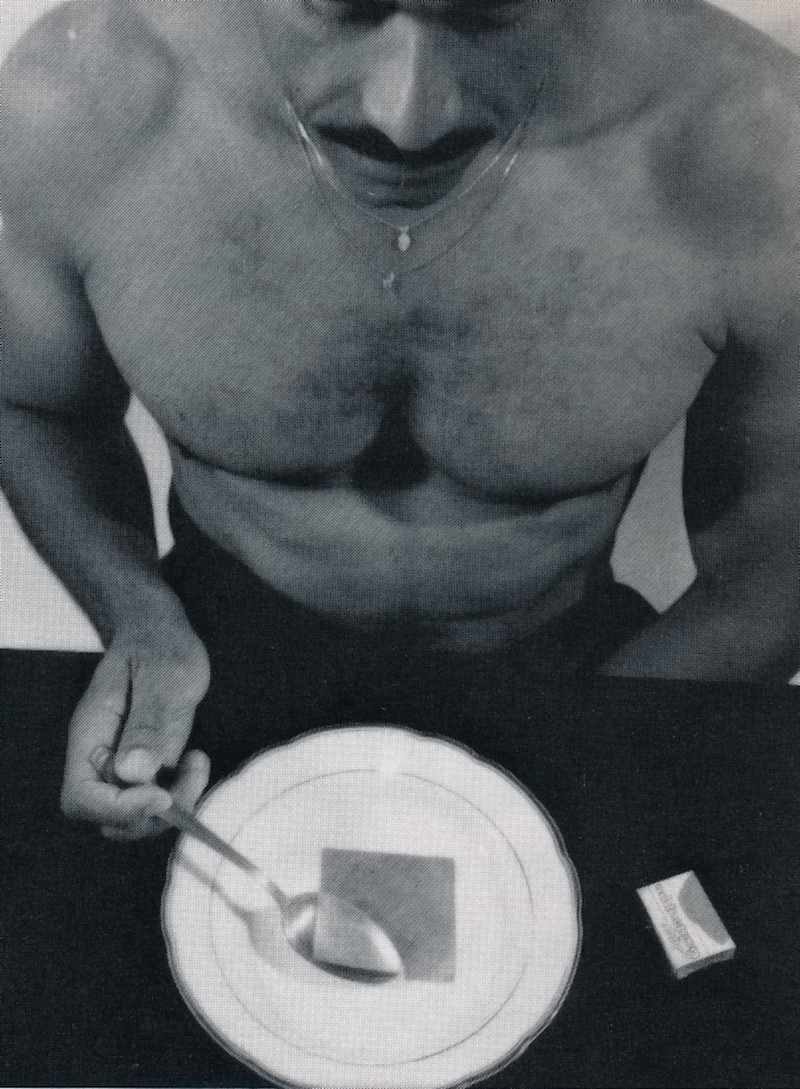
goldsuppe01_photo_amy harris_1989 WERKSTADT Graz "Baur`s Goldsuppe", Photo: Amy Harris. from the catalogue "JEWELRY: MEANS: MEANING"

The city of Graz is rich on avant-garde history in contemporary art that emerged in the 1960s and experienced one of its peaks in the 1980s. A strong connection to Cologne and the group of the Neue Wilden, as well as to the Viennese performance artists carried out by galleries such as Galerie Bleich-Rossi and Artelier shaped the cultural scene. It was also the moment when international Jazz musicians were frequenting the city. The trigon biennial for contemporary art and architecture, as well as the avant-garde festival for performance and visual arts steirischer herbst had become milestones of pioneering artistic positions since their launch in the 1960s. One of the core players from that time and still active today is WERKSTADT Graz – a gallery and an interdisciplinary project space, often working in the field of relational aesthetics. I talked to Barbara Edlinger, co-founder, artist and goldsmith about the history and the vision of WERKSTADT and her approach towards today’s cultural production in the city. 

26 September 2017

INTERVIEW: NORA AL-BADRI AND NIKOLAI NELLES

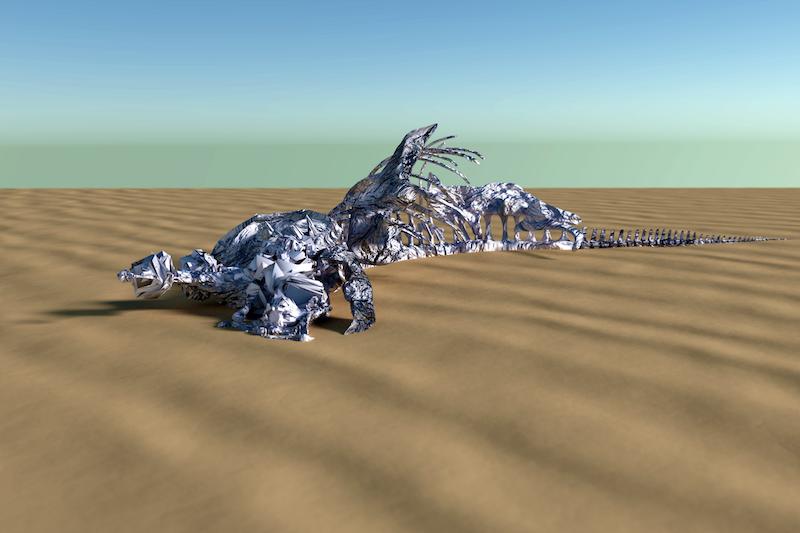
NotASingleBone-skeleton_01
"Not a Single Bone", 2017;  Courtesy Nora Al-Badri and Nikolai Nelles

Forming a relationship between artworks, originality of information production and activism in our current age of technology, while emphasizing and focusing on the importance of open source sharing through their works, artist Nora Al-Badri and Nikolai Nelles have created an open source website: By scanning the head of the Nefertiti Sculpture in Berlin’s Neues Museum in 2015 without prior permission, they allowed public access to 3D-print and copy the effigy. Having sent this data to Egypt for a possible creation of a near-exact replica, Al-Badri and Nelles’ critical project questions the way in which basic concepts like museum, artwork, originality, cultural history, ownership, and structure-production are utilised and taught in Western civilizations. Currently showing their first collaborative solo exhibition “Not a Single Bone” at NOME Gallery in Berlin, I chatted with the duo about their latest project. 

22 August 2017

INTERVIEW: IRENE CAMPOLMI

Irene Campolmi, photo © Luca Cucinotta

Based in Copenhagen, the Italian curator and researcher Irene Campolmi creates networks: with conferences, talks and symposia, she connects international figures of the art world – artists, curators, researchers, art dealers, collectors – to gather and discuss relevant themes, bring people with different skills together and to articulate responses to current political, social and ecological changes. Having previously organised conferences at Louisiana Museum of Modern Art, the Max-Planck Institut / Kunsthistorisches Institut in Florence, and having curated several exhibitions, she currently curates the Talks, Film and Performance program Art ReActs at this year's CODE Art Fair in Copenhagen (31.08-03-09.2017). I spoke to Irene about the key themes she chose for the debates, the artistic participants she selected and about whether an art fair is the right place to hold an academic event.

10 August 2017

INTERVIEW: TOZ ISTANBUL

Exhibition opening of "Homecoming", July, 20170 TOZ exhibition opening "Homecoming", July 2017 

In Kadıköy, one of the most vibrant art districts of Istanbul, lies TOZ artist-run space. Established, in 2015, TOZ has been founded jointly by the artists Ece Eldek, Sinem Dişli, Volkan Kızıltunç and Elvan Ekren. Recently funded by SAHA, the self-declared goal of the non-profit project is to open the founders' studios to other artists and to collectives, in order to work and research together by creating a platform for exhibitions, seminars and workshops. I talked to the team of TOZ about their story, their future plans and the relevance of sustainability for new art spaces in Turkey. 

27 July 2017

INTERVIEW: OLA VASILJEVA

Ola Vasiljeva, Gold Is the Metal With the Broadest Shoulders at Supportico Lopez, Berlin, 2017 , Photo_Linda Fuchs_1 Ola Vasiljeva, "Gold Is the Metal With the Broadest Shoulders" at Supportico Lopez, Berlin, 2017 
Photo © Linda Fuchs; © Ola Vasiljeva

Entering Ola Vasiljeva’s current exhibition “Gold Is the Metal With the Broadest Shoulders“ at Supportico Lopez in Berlin, one finds himself surrounded by drawings and sculptures in the term’s widest sense. Bearing titles like Ivan the Son of Bear, Memmie le Blanc at home in Paris, Big Prince and The Feral Thief, they form a community of social outcasts and mythical characters inhabiting a place somewhere between fact and fiction, history and illusion, dream and reality. The semi-imaginary, the tension between fiction and use, is central to the The Hague-based artist’s suggestive installations, in which metal sculptures seem to transfer the drawings into the three-dimensional and mirrored surfaces transform the exhibition space into a dream-like vision. In our conversation, Ola Vasiljeva talked about the site-specificity of her installations, her interest in the unintentional qualities of backstage areas and about how the idea of unlearning inflected her past projects.

21 July 2017

INTERVIEW: LINDSAY LAWSON

© Lindsay Lawson_featured on artfridge.de
“Half-Truths” © Lindsay Lawson

In 2016, American-born artist Lindsay Lawson hosted a symposium on objectum sexuality – a sexual preference in which a person has romantic and intimate relationships with objects. The event was part of her performance “Choreography for Crane”, presented at the site of the Humboldt Forum at the 9th Berlin Biennale. Objects play a central role in Lawson’s artistic practice, which also comprises video, animation, sculpture, photography, print and text. Often her objects appear in virtual settings. At the Thun Ceramic Residency in Bolzano she is currently working on her first clay sculptures.  

24 June 2017

INTERVIEW: FLORIAN GRAF

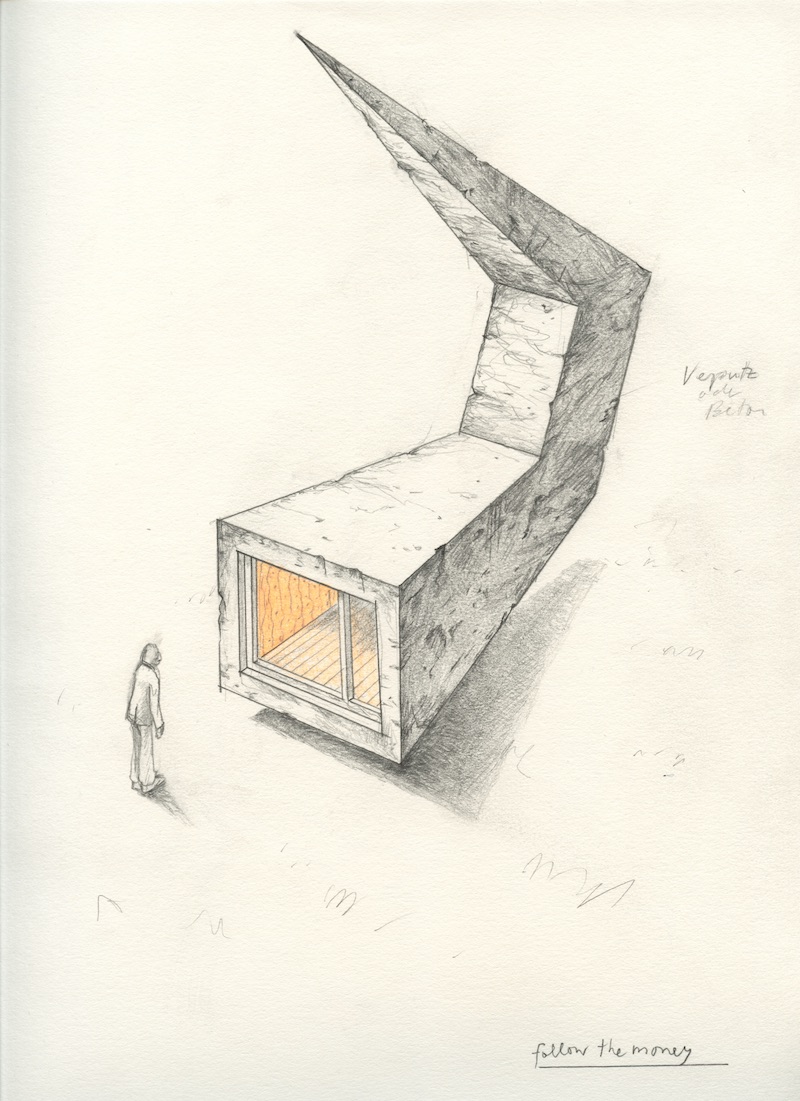
Florian Graf_1 Florian Graf, Verputz oder Beton, Follow the Money, 2009
Single Page from Drawing Book 90, Courtesy the artist

In his sculptures, installations and works on paper, 1980-born Swiss artist Florian Graf explores the way we install ourselves in a changing and transient world. He creates architectural interventions (and solutions) as well as sculptural environments that allow interaction and dialogue. In this interview Florian Graf talks about his passion for drawing and the plan to show his large collection of Drawing Books. 

24 May 2017

VIVA ARTE VIVA – 57. VENICE BIENNALE

Venice Biennale
Erwin Wurm, Ship of fools, 2017, 
Courtesy the artist & La Biennale di Venezia

Responding to a year of political turmoil: of Brexit and Trump; of crackdown in Turkey and of yet more terrorist attacks, this year’s Venice Biennale was meant as a countervailing force. French native Christine Macel set out to curate “a biennale designed with artists, by artists and for artists", wherein art serves as a "last bastion against individualism and indifference”. Lacking an overarching theme, Viva Arte Viva is divided into nine chapters: The Pavilion of Artists and Books and The Pavilion of Joys and Fears in the Central Pavilion of the Giardini; The Pavilion of the Common, - the Earth,  - the Traditions, and - the Shamans; as well as The Dionysian Pavilion; The Pavilion of Colors; and finally The Pavilion of Time and Infinity in the Arsenale. Offering artists loose realms to move within is an intriguing idea, yet its realization often underwhelms. Especially in the Central Pavilion, many works are poorly presented. Frances Starkes' Behold Man! (2013), a strong and detailed 192 x 244 cm collage, is hung in a narrow corridor that prevents visitors from beholding the work in its entirety. Too often the placement of works feels like a compromise, more than a thought through juxtaposition. The nine chapters, with their promise of openness and free space, can come to feel clichéd and banal.