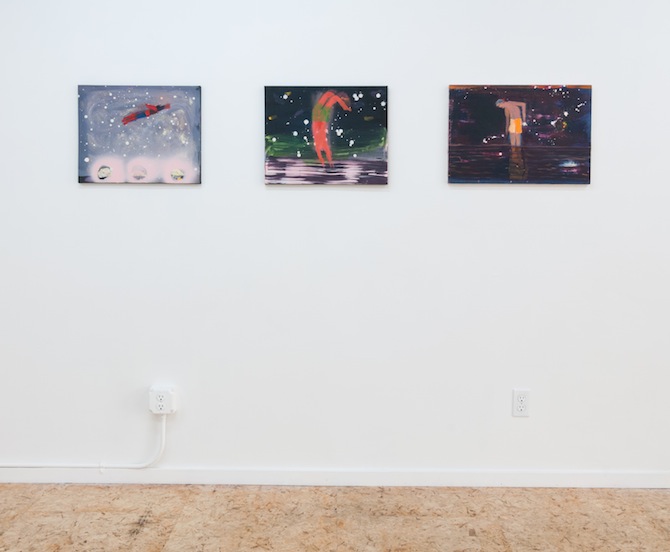
19 April 2015

INTERVIEW: NATHALIE HOYOS AND RAINALD SCHUMACHER

Art Cologne 2015 Art Cologne 2015
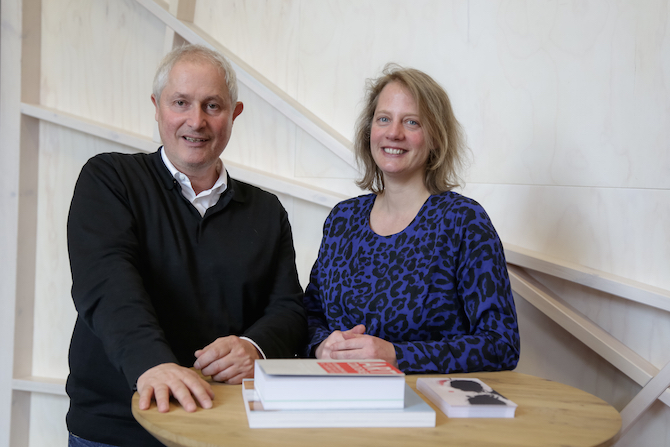
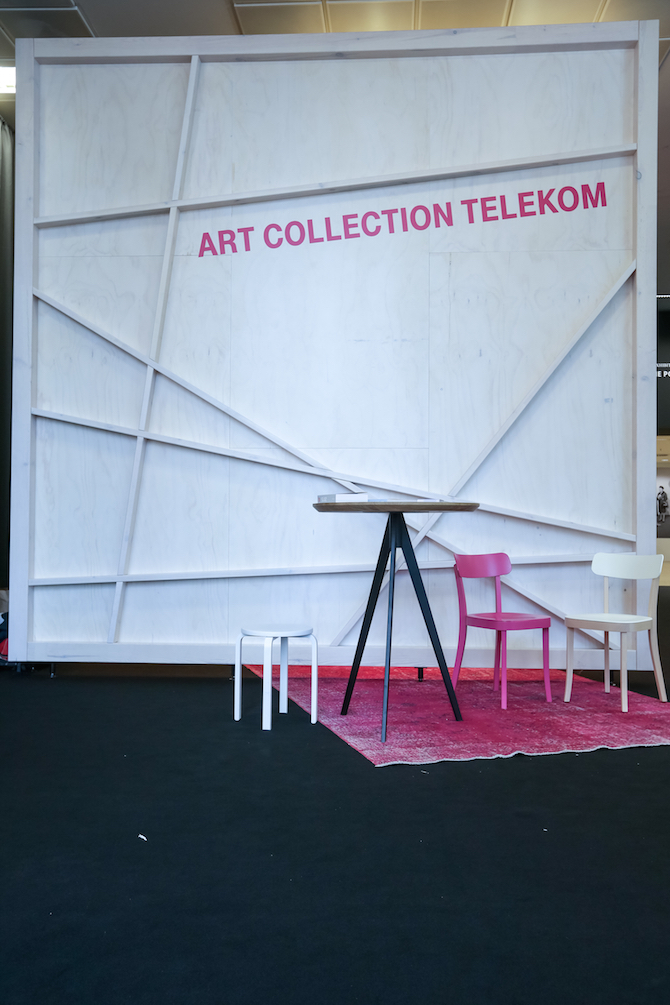
Rainald Schumacher and Nathalie Hoyos at booth Art Collection Telekom; © Deutsche Telekom AG; photos by Norbert Ittermann
– In Collaboration with Deutsche Telekom AG –

Two giant and viciously looking pigs float above a cityscape, opening their mouths and chewing on the architectural fundament of civil life. A hand cuts off a pig’s tail; the blood spreads into the sky. Painted inside the booth of Art Collection Telekom, the 1976-born Ukrainian artist Volodymyr Kuznetsov created the work during the installation phase for Art Cologne 2015. It refers to Koliyivshchyna, a bloody Ukrainian rebellion against Poland in 1768; and it asks what could be the next step after such immense brutality.

Assembled by the curators Nathalie Hoyos and Rainald Schumacher, and directed by Antje Hundhausen, the five-year-old Art Collection Telekom emphasises the contemporary art scene in Eastern Europe. Originally initiated on the occasion of the Telekom’s recently established national companies for communication services in countries such as Romania and Poland, their bonds to Eastern Europe now imply a visual dialogue and exchange.

The collection neither focusses on decorative works for corporate headquarters, nor on big names. It  consists of art works that intend to create a cultural understanding, such as the works by 1986-born Kosovan artist Petrit Halilaj, who currently has a solo show at Kölnischer Kunstverein. One of the collection's major concerns is the support of young Eastern European artists, and especially those, whose works are controversially raising the awareness of social change. Nathalie and Rainald, who are both experienced in managing large collections, have been a part of the small team from the beginning on. I spoke with them about their curatorial work for the collection.

16 April 2015

ART COLOGNE 2015

Walter Dahn at booth Sprüth Magers, Berlin, London Walter Dahn at booth Sprüth Magers, Berlin, London Rose Eken ar booth The Hole, NY and V1 Gallery, Copenhagen Rose Eken at booth The Hole, NY and V1 Gallery, Copenhagen Michael Krebber at booth Galerie Nagel Draxler, Köln:Berlin Michael Krebber at booth Galerie Nagel Draxler, Köln, Berlin; all works © and courtesy the artists and galleries; photos © artfridge
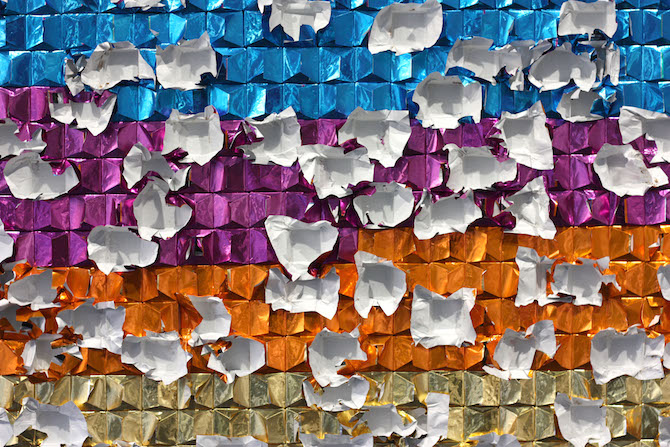
In its 49th edition, the 209 predominantly German participating galleries of this year's art fair ART COLOGNE are divided in segments of emerging and established galleries for contemporary art and galleries for modern art. For the first time, these segments were separated on three floors. A new tactic, that helped bringing together the young and the established contemporary positions and their galleries: hosting the “New Contemporaries" section on the second floor, the “New Positions" and  “Collaborations" section is held in cooperation with NADA on the third floor, while modern and postwar art dealers are united on the ground floor.

10 April 2015

INTERVIEW: ELIZABETH WILLING

Work Elizabeth Willing © and courtesy the artist Work Elizabeth Willing © and courtesy the artist
all images: works by Elizabeth Willing, at Künstlerhaus Bethanien Berlin, © and courtesy Elizabeth Willing

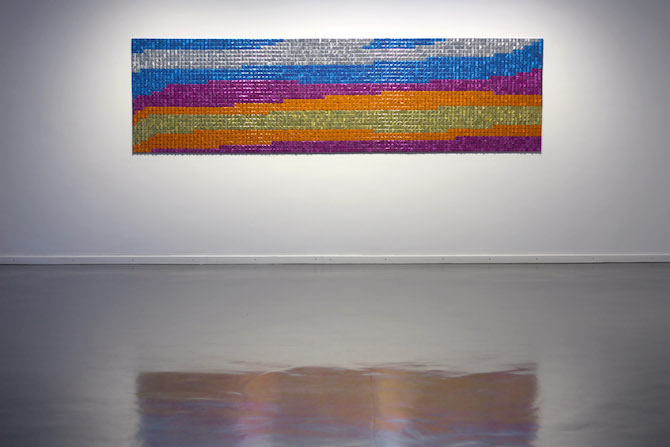
On a distance, the wall object looks like an abstract version of a David Hockney landscape painting. But closer inspection reveals: it is 3000 pieces of chocolate, the type of creamy and cold tasting German Eiskonfekt, wrapped in differently coloured shiny papers. This work, like many other pieces from Australian artist Elizabeth Willing, may be eaten by gallery visitors. Usually based in her hometown Brisbane, where she finished her fine art studies, 1988-born Elizabeth came to Germany and worked with Thomas Rentmeister for a few months until she began her one-year artist residency at Künstlerhaus Bethanien in Berlin. Her sculptural work is mostly made of food or it is related to food products, eating and cooking habits. While usually ephemeral, the objects perform their own fleeting process either through their consumption or through their evident, limited sustainability. Strong smells of food, such as cheese, are paired with materials, interfering the perception of other pieces through multi-sensory manipulation and thus sabotaging the common anticipation. Elizabeth stages food as as solid material, but, always with a wink, she also wittily reveals our complicate relationship to the moral politics and the ethics of food.

3 April 2015

INTERVIEW: MATYLDA KRZYKOWSKI

Portrait-M-Krzykowski Craft-&-Bling-Bling--Fake Depotgrafie-by-Emyl-Depot-Basel-Moritz-Lehner From the top: Portrait Matylda Krzykowski; Depot Basel - Ort für kontemporäre Gestaltung; Depot Basel inside (Depotgraphy – a display system by Emyl / Moritz Lehner)

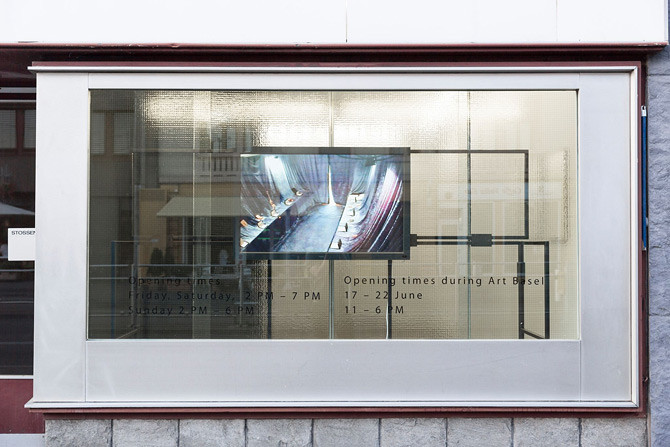
The small German word "Tausendsassa" describes a person who has many talents and possibly makes use of all these abilities. Matylda Krzykowski is one of these rare all-rounders: Open-minded and articulate, she works as a designer, curator, publisher and artist, while her  practice involves creative production, as much as exhibition making and developing of educational programs, giving workshops and holding lectures. She is a creator, an organiser, an educator, a collaborator and a net-worker. She interviewed designers, who were asked to draw their answers, and coupled other designers with her lecture format Design Date. While she frequently travels between London and Basel, where she co-directs the design space Depot Basel - Ort für kontemporäre Gestaltung, Matylda just spend one year in Maastricht at the Jan van Eyck residency among many other creative producers. Her research about the display in a context of art and design along institutional strategies of representation now culminated in a hand-printed publication, a new exhibition format in Depot Basel's shop windows and an installation that Matylda exhibited during the open studios at Jan van Eyck.

17 March 2015

INTERVIEW: NAZ CUGUOĞLU

Naz Cuguoğlu
portrait of Naz Cuguoğlu; photo credit by by Zeynep Bolat

Residencies are a growing trend for artists and curators to establish an international network. But who are the organisers of these short-term projects? In Istanbul, one of the great networkers is Naz Cuguoğlu – coordinator of the maumau residency program in the district Çukurcuma. Having previously studied psychology and recently graduated in social psychology, Naz specialised in cultural psychology and volunteered in culture labs in Turkey, Nicaraguara and the US. She worked in an Istanbul-based gallery and frequently contributes reviews and interviews to publications like Istanbul art news, Artful Living, Trendsetter or KLOK. For her current project, the maumau residency, Naz organises the artists’ stay and co-curates exhibitions together with her collaborateur and maumau-founder Sine Ergün.

12 March 2015

INTERVIEW: SAMUEL LEUENBERGER

Works from "Constructed Culture Sounds Like Conculture" at Ellis King, Dublin / Darren Bader, Mia Marfurt, Adrien Missika, Lydia Ourahmane and Tabor Robak Works from "Constructed Culture Sounds Like Conculture" at Ellis King, Dublin / Darren Bader, Mia Marfurt, Adrien Missika, Lydia Ourahmane and Tabor Robak
all images: installation views "Constructed Culture Sounds Like Conculture" | w/ Darren Bader, Mia Marfurt, Adrien Missika, Lydia Ourahmane and Tabor Robak | curated by Samuel Leuenberger | at Ellis King, Dublin | courtesy and © the artists | photo credit: Gunnar Meier

Not every title of an exhibition is self-explanatory. Sometimes it just increases the confusion. Constructed Culture Sounds Like Conculture is a group show at Ellis King in Dublin that has been put together by the swiss curator Samuel Leuenberger. Along the individual fantasy-scapes and narratives constructed by the artists Darren Bader, Mia Marfurt, Adrien Missika, Lydia Ourahmane and Tabor Robak, the show discusses the value of cultural constructions creating realities, responsibilities, images, perception-patterns and emotions attached to these realities. The result is a beautiful exhibition with a subject that is so complex and far-reaching, that I asked Samuel to explain the concept of Constructed Culture a bit further.

Samuel has a keen sense of aesthetic compositions and challenges. Having previously co-curated exhibitions like the live work show "14 Rooms" (2014) in Basel or the current painting show „Six Possibilities in Painting (Int)“ at Galerie Bernhard in Zurich, he experimented with both, the presentation of various artistic media and the negotioation of different subjects. With SALTS, his own project space in Birsfelden, just outside Basel, that started as dinner club and art salon, Samuel created a space for curatorial experiments and the development of ideas. Today he runs SALTS together with associate curator Elise Lammer, organising exhibitions and inviting others to work with them.

27 February 2015

FORM IS WHAT HAPPENS

#19Installation View_Form is What Happens Tobias Buckel_Form is What Happens1 From the top: installation view; Tobias Buckel, at Form is What Happens, Archiv Massiv, Leipzig / Courtesy and © the artists

“Form is what happens. It’s the fact of things in the world, however they are.” is a little known quote from the American poet Robert Creeley. With this statement he extended his prior principle “Form is never more than an extension of content”, which his older colleague Charles Olson used in 1950 in a manifest for the ‘Projective Verse’ – an open-form lyric. They demanded a separation of postmodern poetry from its static tradition and encouraged abstract tendencies, which had already begun in fine arts. Creeley’s proposition applied to the freedom of artistic expression and its diversity. Yet, despite its early empowerment, the form remains a condition of artistic production, be it a form of formlessness. Also contemporary painting – another medium that is preceded by a dictate of forms – is confronted with the question of what could be considered a painterly form today and which parameters determine its motifs. 

23 February 2015

INTERVIEW: JORDAN TATE

TateSilva_NewShelterPlan_20_0160 TateSilva_NewShelterPlan_19_0180 TateSilva_NewShelterPlan_13_0178 all images above: Jordan Tate and Rick Silva at New Shelter Plan, Copenhagen / courtesy and © the artists 

Much discussed during the last Century, we keep on asking what role photography plays in our current society. For Jordan Tate, a 1981-born American multi-media artist who holds a degree in Philosophy and one in Photography, the medium and the image are always "fundamentally inseparable": His art negotiates the practice, the action, the process of image making and their perception through the context of photography. Within these subjects, Tate's photographic works are not necessarily two dimensional, they are also animated, sculptural or they extend their form into an installation. Living and working in Cincinnati, his current show DRAPE WAVE in the Copenhagen-based project space New Shelter Plan exhibits several works that he and his colleague Rick Silva created together. In our interview Tate told me about this collaboration, about the aura and the object-hood of the photographic image.

15 February 2015

INTERVIEW: RASMUS NILAUSEN

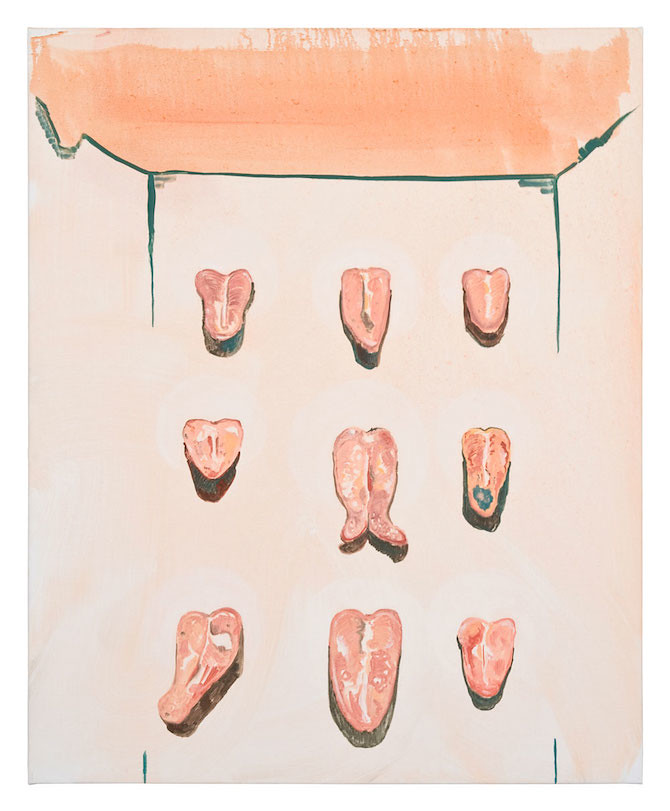
The-Museum-of-Tongues_100x81_13 04_RN_SALVATORE 11_RN_SALVATORE all works by Rasmus Nilausen at Traneudstillingen, Copenhagen, courtesy and © Rasmus Nilausen

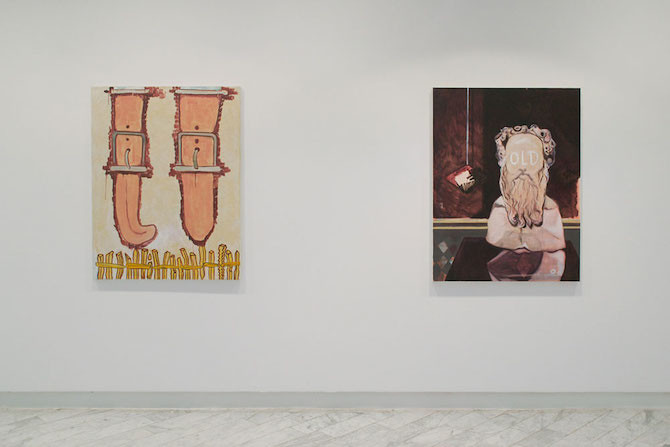
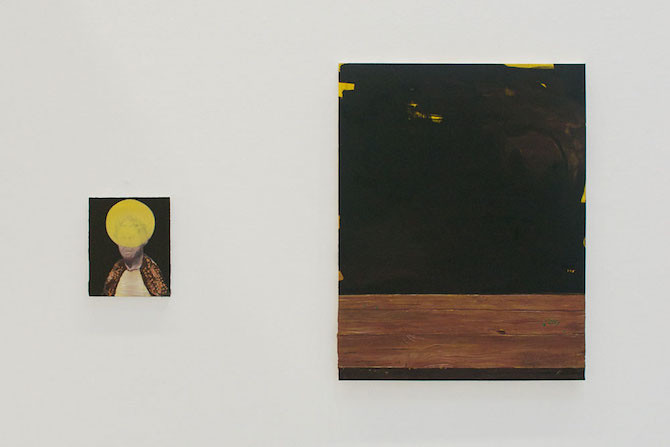
There is something boy'ish about the way Rasmus Nilausen smiles. Its like a small blink. As if he knew a funny thing that he decided not to share. And it is a very similar misteriousness that can be found in his paintings: each holding a story that is suggested through symbolic references, the paintings' visual appearance often guides in a completely different direction. Sometimes funny, sometimes tragic and sometimes just absurd. Based in Barcelona for more than a decade, the a 35-year old Danish painter uses his exhibitions to reformulate and, specifically, to re-invent the way we look at paintings. He tracks down the process of painting – unfolds it to its very basic techniques – and finds a new literalness to tell their stories. Rasmus explores the recipe of historical masterpieces and proceeds hoping that, as he has stated in a previous interview in 2011, "the perfect painting is always the one that I am about to paint – the next one." Having shown his works in art institutions, such as the ICA in London and Fundació Tàpies in Barcelona, Salvatore, his current exhibition at Traneudstillingen in Copenhagen is his first show in Denmark.  

15 January 2015

INTERVIEW: KATJA KOTTMANN

Katja Kottmann_1_1_Stuhl Katja Kottmann_1_1 all works shown in the exhibition SHIPSHAPE, Städtische Galerie am Park, Viersen; courtesy and © Katja Kottmann

We often speak about site-specificity when referring to art works that relate to the environment they are exhibited in. In the case of conceptual installation artist Katja Kottmann this description finds another dimension: Each of her works recall or manipulate its past or current surroundings. While her objects' aesthetic is often strongly reminiscent of gestures in minimalist paintings, Kottmann conserves architectural features and represents them as ready-mades, honouring the basic form of space in a neutral approach.

Following a one-year residency in Viersen, a small town in west Germany, 1982-born Kottmann finished her stay with the solo exhibition SHIPSHAPE at Städtische Galerie am Park. The show touches many of the artist's recurring subjects, such as aspects of dispersion and of perception. The latter, as suggested by Kottmann, can never be motionless and is never entirely determined. Even the smallest shifts, interventions or translations lead to new perspectives in perception and give a visual appearance to the invisible. In our interview Kottmann told me about her show and her play with shifts.

15 December 2014

INTERVIEW: KATHERINE BRADFORD

Katherine Bradford_at ADAMS AND OLLMAN in Portland, USA, featured on artfridge Katherine Bradford_at ADAMS AND OLLMAN in Portland, USA, featured on artfridge Katherine Bradford_at ADAMS AND OLLMAN in Portland, USA, featured on artfridge all works by Katherine Bradford at ADAMS AND OLLMAN in Portland; courtesy Adams and Ollman, copyright Katherine Bradford

Katherine Bradford, an American artist and recent Guggenheim Fellow, has been making a personal and intimate body of work that merges abstraction and figuration to emotional ends for nearly three decades. Her work, in turns humorous, epic and vulnerable is in conversation with a younger generation of artists dedicated to finding a way to tell stories and share experience through painting. During Bradford’s two person exhibition with Sarah Gamble at Adams and Ollman in Portland, the artist is interviewed by her son, Arthur Bradford, a writer and Emmy-nominated filmmaker.

7 December 2014

INTERVIEW: MARCO DI GIOVANNI

Marco di Giovanni _ projects of Ginnungagap Marco di Giovanni _ Stars Like Rust Marco di Giovanni _ Stars like Rust (particular, inner vision))
from the top:  (1)"Projects of Ginnungagap", (2,3) "Stars Like Rust" by Marco di Giovanni, copyright and courtesy the artist

Last year, during the Contemporary Istanbul Art Fair, I met the Italian artist Marco Di Giovanni, who told me about his current, archival food project: He draws everything he consumes on yellow paper for one entire year and will exhibit his personal collection of food in an exhibition at BLOK art space in 2015. Being well-known in Istanbul by now, the thoughts of the 1976-born performance- and installation artist are not only reminiscent of Daniel Spoerri’s food collages, but also of Marco Ferreri’s movie “La Grande Bouffe”. Even though Marco's approach responds to complex and philosophical ideas, he formulates clear statements and regularly communicates ethic issues through an aesthetically clean formal language. Employing various media and elements from different contexts, Marco’s art is a constant experiment of challenging space and time constructions, of perception and of our consciousness.